The short answer? Start with your brand strategy and visual identity, then build outward from there. Investing in professional marketing collateral design services doesn’t mean doing everything at once. It means knowing what to prioritise and when. Most Irish businesses feel pressure to launch with a full suite of materials, but the smartest brand investment isn’t spending more. It’s knowing what to spend on first. A phased approach saves money, produces better results, and means every piece of collateral you create actually earns its place.

What Actually Counts as Brand Collateral?
Brand collateral is everything that visually and verbally represents your business to the outside world. Think logo, business cards, website, social media templates, packaging, brochures, signage, email signatures, and presentation decks. The list can feel endless, and that’s exactly the problem. When you see it all laid out, the instinct is to try to tick every box at once. But not all collateral is created equal, nor is all of it urgent. Some pieces are foundational. Others can wait until your business is ready for them. The key is understanding which is which.
What Should Every Irish Business Invest in Before Anything Else?
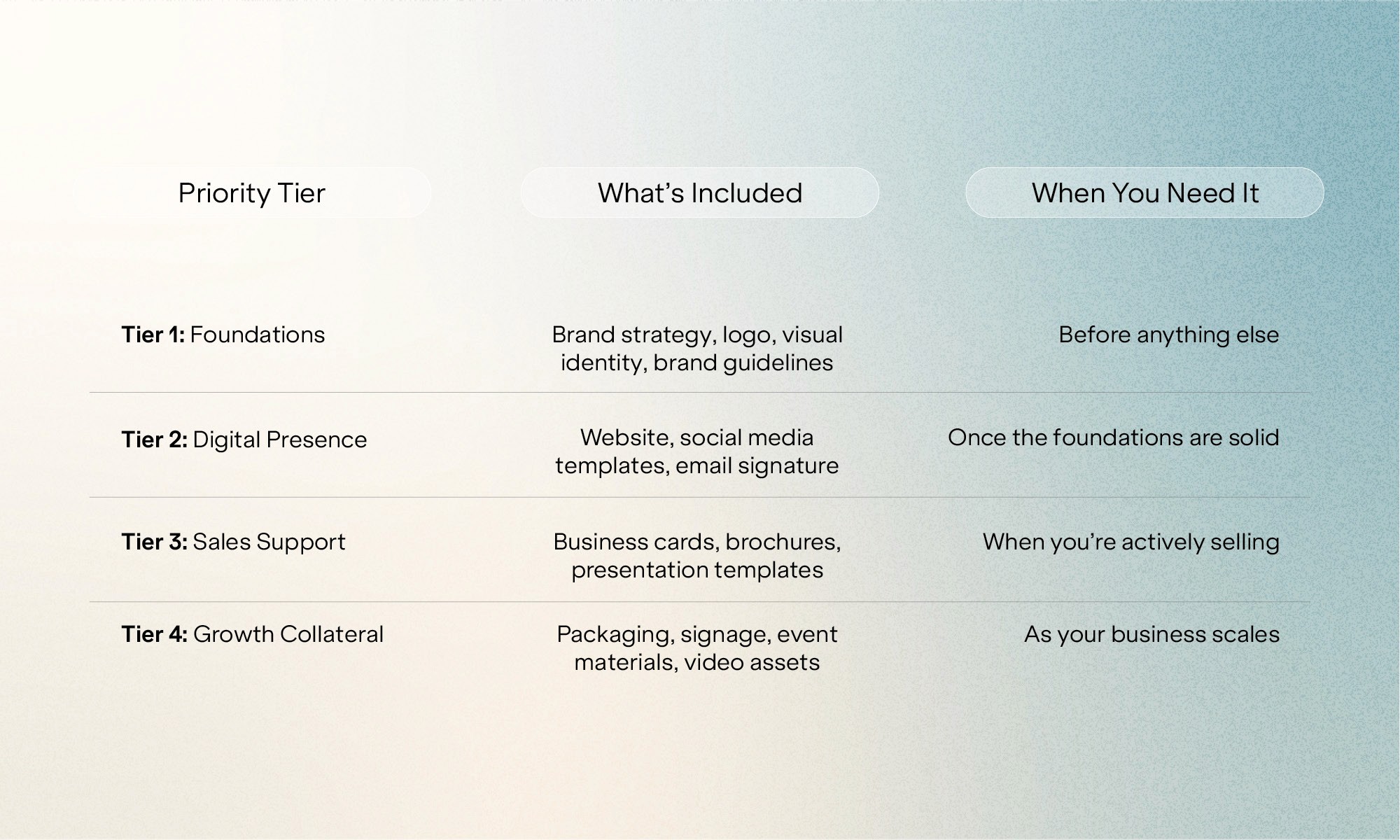
Before you think about business cards or brochure designs, you need a clear brand strategy. This is your foundation: who you are, who you serve, what makes you different, and how you communicate that. From there, your visual identity brings that strategy to life through your logo, colour palette, typography, and brand guidelines.
In our 10+ years working with Irish businesses, the ones who skip strategy always end up spending more later. They invest in collateral that looks good in isolation but doesn’t hold together as a brand. Then they’re back at square one, paying to fix inconsistencies they could have avoided.
The Handmade Soap Company is a good example of getting this right. They built a distinctive visual identity and packaging as their priority collateral before expanding into broader marketing materials. Foundations first, everything else second.
Collateral Priority by Growth Stage:
How Does Your Industry Affect Which Collateral to Prioritise?
Not every business needs the same materials in the same order. Your customer journey determines the priority of your collateral.
If you’re in retail or food and beverage, packaging and in-store signage move up the list quickly. Penneys built a strong in-store visual identity long before their digital presence caught up, because that’s where their customers were making decisions. For professional services, presentation templates and proposals carry more weight than packaging ever will. Hospitality businesses often find that menu design, signage, and digital presence all compete for second place after brand identity.
Grafton Barber is a useful Irish example here. They invested in consistent visual identity and in-store collateral across their locations before expanding into digital. They knew their customers experienced the brand in the chair first, so that’s where the investment went.
If you’re in a creative or lifestyle sector, social media templates and photography style guides become essential earlier than they would for, say, an accountancy firm. Know where your customers first encounter your brand, and invest there.
What’s the Difference Between Essential and Nice-to-Have Collateral?
Here’s a simple test: if a potential customer saw only this one piece of collateral, would they understand your brand? If the answer is yes, it’s probably essential. If it supports or enhances an experience they’re already having, it’s nice-to-have.
BrewDog nailed their brand identity and packaging before investing in broader marketing materials. The essentials came first because those were the touchpoints that mattered most at their stage.
Watch out for “brand creep,” too, which is adding collateral without a clear strategic purpose. Every new piece should fill a genuine gap, not just add to the pile.
Before investing in new collateral, ask yourself:
• Does my brand strategy clearly define who I am and who I serve?
• Is my visual identity consistent across everything I already have?
• Will this new piece directly support a customer touchpoint?
• Can I maintain the quality and consistency of this addition?
• Is this filling a gap or just adding to the pile?
When Should You Invest in the Next Tier of Brand Materials?
There are a few clear signals that it’s time to expand. Your current collateral is consistently used and regularly seen. You’re entering new markets or channels that your existing materials don’t cover. Customers or prospects are asking for something you don’t have. Or your business has grown to a point where the gaps are starting to show.
The important thing is to invest because there’s a genuine need, not because you feel like you should. Phased investment isn’t cutting corners. It’s being strategic about where your money goes. The most successful brands we work with didn’t build everything overnight. They built the right things at the right time.
Ready to Figure Out Your Priority List?
Every business is different, and what you need first depends on your industry, your growth stage, and where your customers find you. If you’d like help working out what makes sense for your situation, we’re always happy to talk it through. No pressure, just a practical conversation about what would actually move the needle for your brand.