Your portfolio proves you can do the work. But here's the thing: so can dozens of other talented designers competing for the same projects. The real issue isn't your design skills or even your photography. It's positioning. Premium clients aren't simply buying interior design services. They're investing in a vision, a process, and a brand they trust to transform their space. Designers and architects who consistently win higher-value projects have moved beyond portfolio presentation to strategic brand building. Getting this right starts with branding for interior designers that defines who you are before you decide how you look.
What's the Difference Between a Portfolio and a Brand?
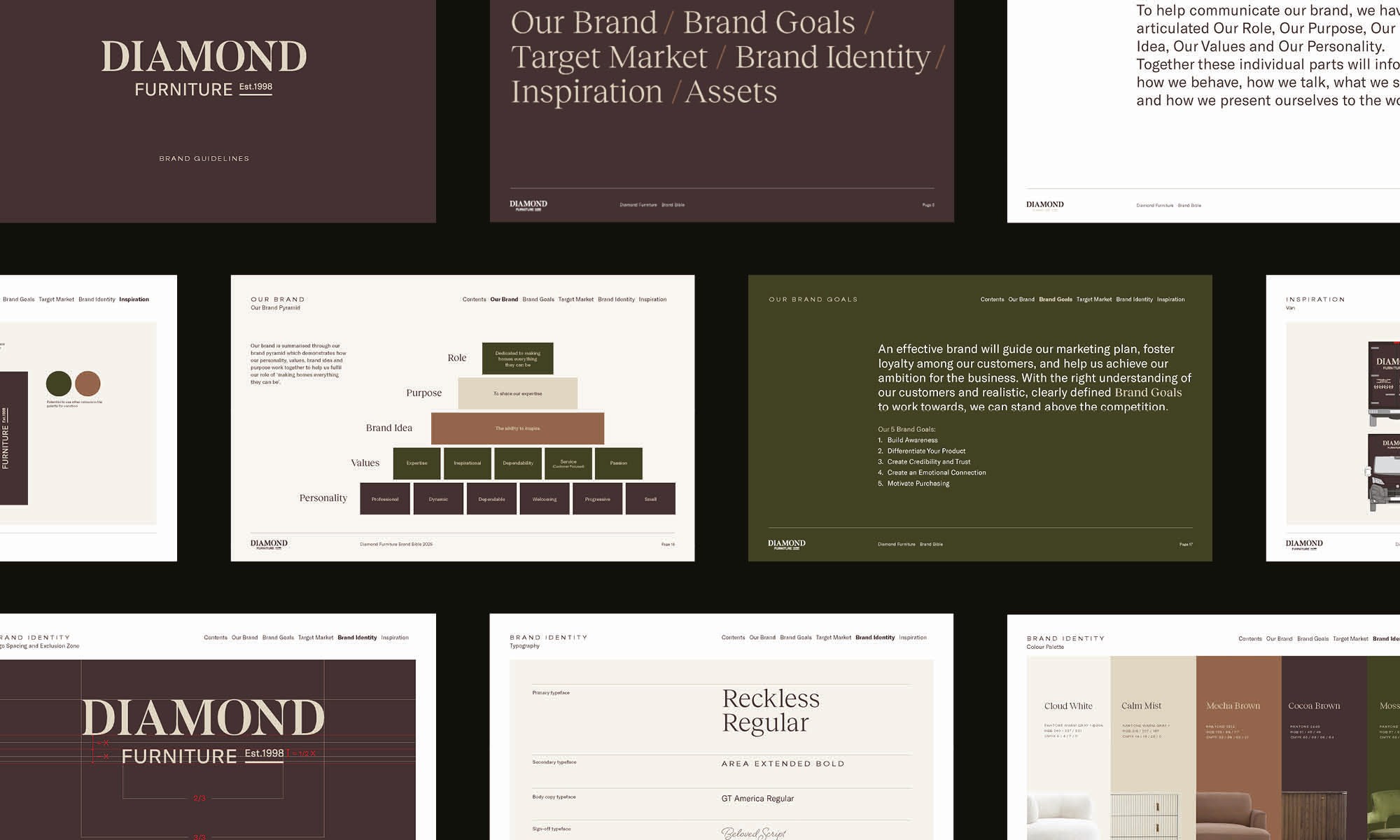
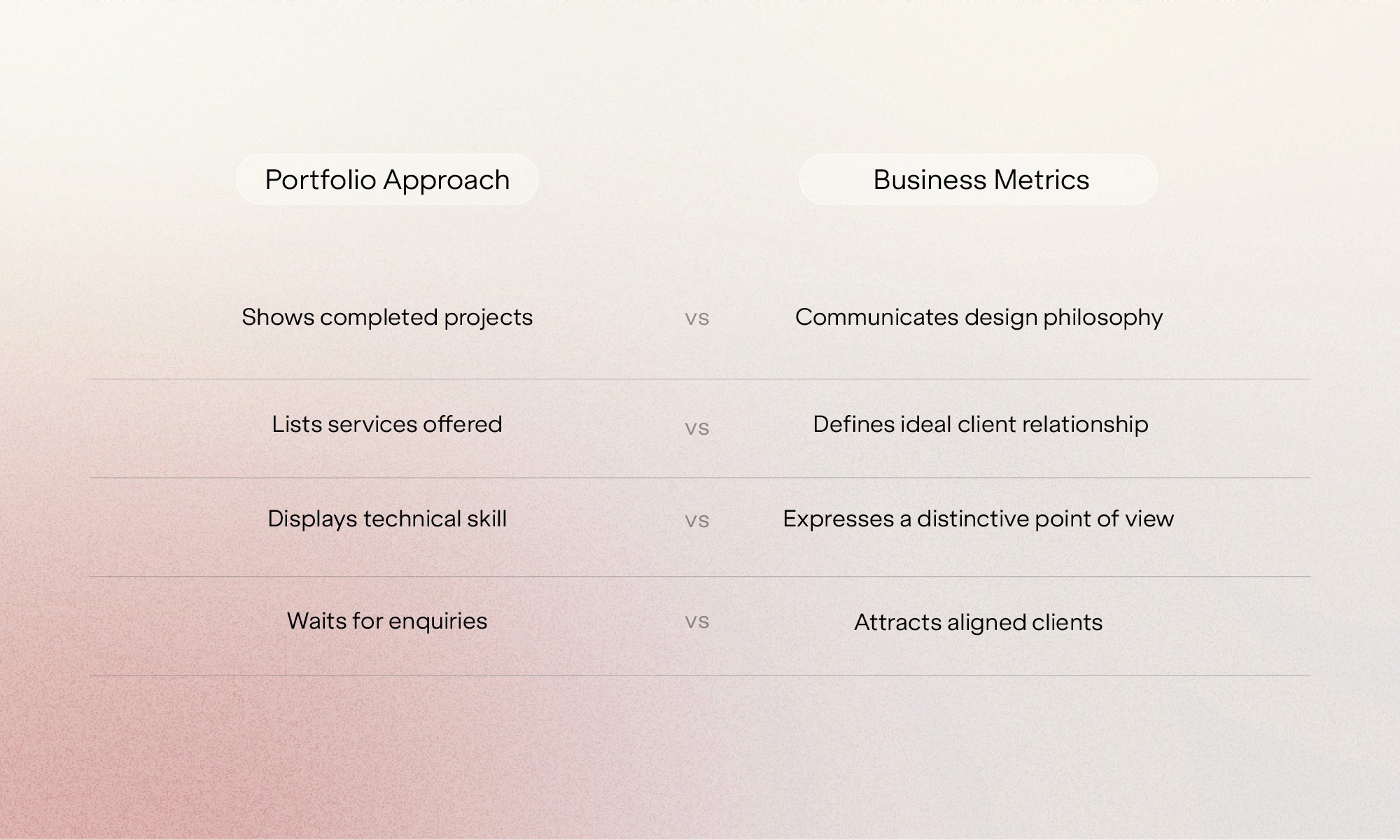
A portfolio shows what you've done. A brand communicates who you are and why that matters to the people you want to work with.
This distinction trips up many talented designers. They invest in beautiful project photography, build sleek websites, and curate their best work. Then they wonder why enquiries still come down to price comparisons or why clients ghost after the initial meeting.
The problem is that premium clients make decisions based on alignment. They want to understand your values, your philosophy, and your process before they even look at your completed projects. A portfolio is evidence of capability. A brand is the story that gives that evidence meaning and helps clients see themselves in your work.
In competitive markets like Dublin, where numerous skilled designers and architects chase the same high-end residential and commercial briefs, portfolios start to blur together. Distinctive branding becomes the differentiator that gets you shortlisted and, more importantly, gets you chosen.
How Do Top Designers Build Brands Beyond Their Work?
Look at the designers who've built international reputations, and you'll notice something: their brand identities exist independently of any single project.
Kelly Wearstler transformed from an interior designer to a global lifestyle brand through a distinctive maximalist philosophy. Her bold, vintage-inspired aesthetic with rich textures and unexpected colour combinations became instantly recognisable. She expanded into furniture, lighting, fashion, and hospitality projects for clients like the Four Seasons and Viceroy Hotels. People hire Wearstler not just for what she creates, but for the creative vision she represents.
Kelly Hoppen built her brand over four decades on her "East meets West" design philosophy. Her signature neutral palettes and balanced, tactile interiors became so identifiable that she expanded into product lines, yachts, aircraft, and cruise ships. Clients seek her out because they connect with her articulated point of view before viewing any project work.
The common thread? Both built brands around a clear, communicated philosophy that clients could identify with before viewing any project work.
What Do Premium Clients Actually Look For?
Premium clients invest in confidence and clarity, not just capability. They've likely seen multiple portfolios of similar quality. What separates you is how clearly you can articulate what working with you will be like.
They want to understand your process before seeing your finished work. How do you approach a brief? How do you collaborate? What does your client journey look like from first conversation to project completion?
They're also assessing cultural fit. Will communication be smooth? Do your values align with theirs? Does your brand feel like somewhere they belong?
When your brand clearly answers these questions, price becomes secondary to value. Premium clients choose designers whose brand promise aligns with their aspirations for their space. They're not comparing hourly rates. They're choosing a partner for a significant investment in their lives or work.
What Brand Elements Should Interior Designers Focus On?
Building a brand doesn't mean becoming a celebrity designer. It means creating clarity around what makes you distinctively you.
Start with your design philosophy. What's your point of view on space, materials, and how people should feel in the environments you create? This doesn't need to be revolutionary, but it does need to be articulated.
Define your signature style. What visual or experiential elements appear consistently across your work? What would make a project recognisably yours?
Document your client experience. How do you work? What does your process feel like from the client's perspective? This often matters more than the final result.
Ensure your visual identity reflects your design sensibility. If you create refined, considered spaces, your brand touchpoints should feel the same way.
Brand Foundation Checklist for Designers:
☐ Written design philosophy (2-3 sentences)
☐ Defined signature style elements
☐ Documented client journey and experience
☐ Consistent visual identity across touchpoints
☐ Website messaging focused on client transformation
These elements work together to create a brand positioning that attracts the right clients and sets appropriate expectations from the first interaction.
Where Do You Start?
Transitioning from portfolio-led to brand-led positioning takes honest reflection. It means stepping back from individual projects to identify the thread that connects your best work and your ideal client relationships.
This is where brand strategy becomes valuable. Not as a marketing exercise, but as a process of clarifying who you are, who you serve, and why that combination creates something worth paying a premium for.
Your talent got you this far. Strategic branding is what takes you further.