Learn how to set measurable brand goals for 2026. Move beyond vague objectives to specific, quantifiable targets that align with your business growth plans.
How Do I Set Measurable Brand Goals for 2026?
Start by defining what you actually want to achieve in specific, measurable terms. Rather than "improve brand perception," aim to "achieve 75% positive sentiment in customer feedback surveys by Q3 2026." Rather than "increase awareness," target "reach 40% unprompted brand recognition among our target market by year-end 2026."
You know your business better than anyone. The key is making goals specific enough that you'll definitively know whether you've achieved them. Vague brand goals fail because you can't track progress. Measurable goals give you clear targets and reveal whether your strategy is working.
If you're planning for 2026, start your strategic thinking now. Q4 2025 is ideal for establishing baselines, setting objectives, and planning initiatives that will drive progress throughout the year.
Brand Goal Setting Framework
Start with your business objectives and work backwards to brand requirements
Make every goal specific, measurable, and time-bound
Establish clear baseline metrics before setting targets
Align brand goals with resources and budget you actually have
Break annual goals into quarterly milestones for manageable progress
Define who's responsible and how you'll track each metric
What Makes a Brand Goal Actually Measurable?
The difference between vague and measurable goals is specificity. A Dublin-based retail business saying "we want to be known for quality" isn't measurable. Saying "we want 60% of customer reviews to specifically mention quality or craftsmanship by June 2026" gives you something concrete to track.
You can create measurable brand goals by including numbers, percentages, or clear yes/no outcomes. Specify timeframes. Identify the audience or market segment. A measurable goal for an Irish tech company might be "achieve recognition from 50% of enterprise decision-makers in our sector by Q4 2026" rather than simply "become a recognised name."
When you approach brand planning services with these clearly defined goals, you ensure the work focuses on your actual needs rather than generic solutions.
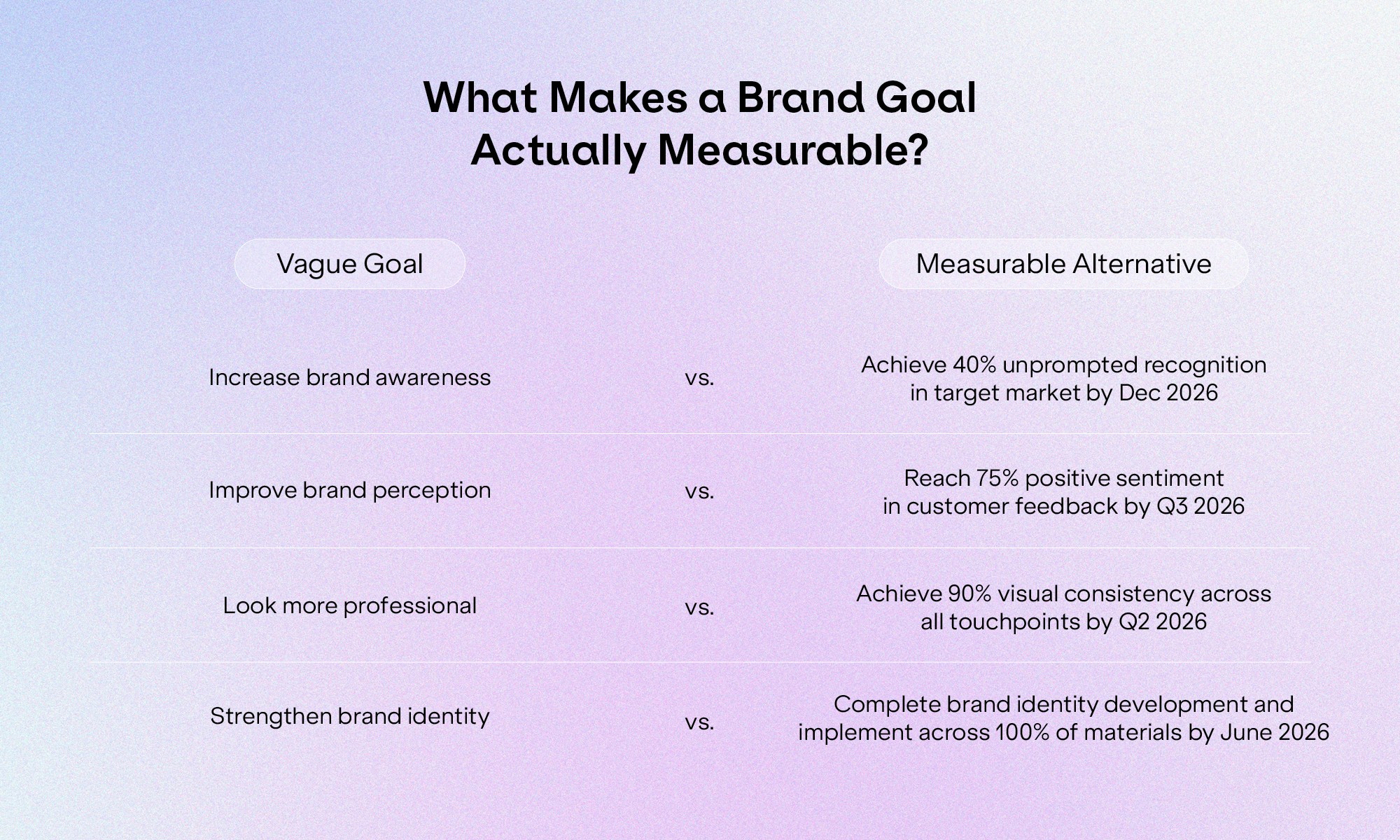
Vague Goal | Measurable Alternative | How to Track |
Increase brand awareness | Achieve 40% unprompted recognition in target market by Dec 2026 | Quarterly brand awareness surveys |
Improve brand perception | Reach 75% positive sentiment in customer feedback by Q3 2026 | Review analysis, NPS tracking |
Look more professional | Achieve 90% visual consistency across all touch-points by Q2 2026 | Brand audit scoring system |
Strengthen brand identity | Complete brand identity development and implement across 100% of materials by June 2026 | Implementation checklist |
How Do You Align Brand Goals with Business Objectives?
Start with your business goals for 2026. What revenue targets are you aiming for? Which markets are you entering? What customer segments are you targeting? Your brand strategy should support these objectives directly.
If your business goal is entering a premium market segment, your brand goal might be "position brand as premium choice through visual identity refresh by Q2 2026." If you're scaling, you might target "maintain consistent brand experience across three new locations by achieving 95% brand guidelines compliance."
An Irish professional services firm aiming to attract larger clients needs brand goals around credibility and authority. A Dublin hospitality business expanding needs goals around recognition and differentiation. You understand these nuances because you understand your business.
What Brand Metrics Should You Actually Track?
Recognition metrics tell you if people know you exist. Track unprompted and prompted awareness in your target market. For local businesses, geographic recognition matters more than broad awareness.
Perception metrics reveal what people think. Customer sentiment analysis, Net Promoter Score, and attribute associations show whether you're positioned as intended. Are customers associating you with the qualities that matter to your business goals?
Consistency metrics ensure quality across touch-points. Brand audit scores, visual identity compliance rates, and messaging alignment reveal whether your brand shows up consistently.
Business impact metrics connect brand performance to results. Track lead quality, conversion rates, pricing power, and customer acquisition costs. Strong brands should positively influence these numbers.
How Do You Break Down Annual Brand Goals into Action Steps?
You can make annual goals manageable through quarterly planning. If your 2026 goal is achieving 50% brand recognition, break this into quarterly milestones. Q1 might focus on brand identity development. Q2 on implementing creative and visual design across materials. Q3 and Q4 on consistent execution and measurement.
Start with a brand audit to establish your baseline. You can't set realistic targets without knowing where you are now. This reveals which areas need most attention and helps you prioritise initiatives.
Allocate resources realistically. Major brand identity development takes time and budget. Ensure your goals match what you can actually execute. Brand guidelines and toolkits ensure consistent execution when multiple people create materials.
How Do You Know If Your Brand Goals Are Realistic?
Benchmark against similar businesses in your sector. If comparable Irish companies achieve 30% brand recognition, targeting 80% in one year probably isn't realistic.
Consider your resources honestly. Comprehensive brand strategy development, creative and visual design, and branding and marketing collateral all require investment. Set goals that match what you can properly resource.
Timeline expectations matter. Brand perception shifts take time. Allow realistic timeframes for meaningful change rather than expecting overnight transformation.
When you've defined your measurable brand goals and understand your business objectives clearly, you're ready to engage professional support strategically.